Supporting Every Structure From the Ground Up
Aguilar Masonry & Concrete, LLC pours concrete foundations in San Marcos that provide the structural integrity your home or addition depends on.
Your home in San Marcos rests on a foundation that carries the entire weight of the structure, distributes loads evenly across the soil, and resists settling that leads to cracks in walls and uneven floors. When a foundation is poured correctly with proper reinforcement and site preparation, you avoid the costly repairs that come from settling, moisture intrusion, and structural movement. Every wall, roof, and floor system depends on the stability that begins below ground level.
Aguilar Masonry & Concrete, LLC builds concrete foundations for residential structures and additions using methods that account for soil conditions, load requirements, and long-term performance. The process includes excavation, forming, placement of steel reinforcement, and pouring concrete mixed to meet specifications for strength and durability. Each foundation is built to support the structure planned for it, whether that means a new home, a garage, or a room addition that ties into existing construction.
If you are planning a project in San Marcos that requires a foundation, contact Aguilar Masonry & Concrete, LLC to discuss site conditions and structural requirements.
Why Reinforcement and Site Work Matter
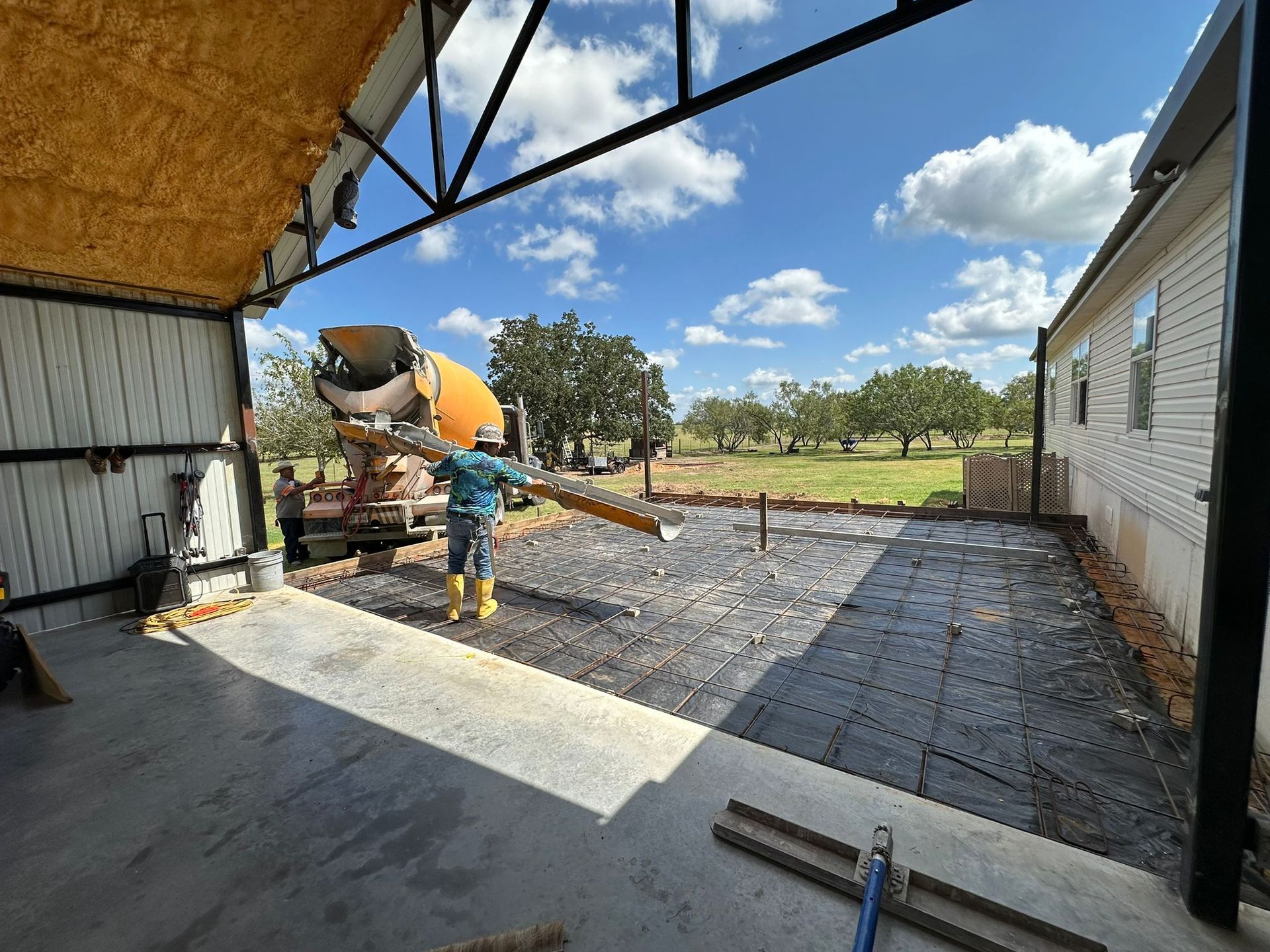
When your foundation is poured in San Marcos, the team prepares the site by excavating to the required depth, compacting the soil, and building forms that define the edges and elevation of the concrete. Steel rebar is placed inside the forms according to engineering specifications, creating a grid that resists tension and prevents cracking as the foundation cures and carries load. The concrete is mixed to a strength rating that matches the demands of the structure, and it is poured continuously to avoid weak joints.
After the foundation cures, you will notice a level surface that does not settle or shift, no visible cracks or voids, and a solid base that supports framing and finishes without movement. The foundation remains stable through seasonal moisture changes and the weight of construction materials added during building.
The work includes proper grading around the perimeter to direct water away from the foundation, which prevents soil erosion and hydrostatic pressure that can cause cracking over time. The foundation is built to meet the specifications provided by your builder or engineer, and it is inspected before framing begins. This service does not include structural design or engineering, which must be completed before construction starts.
You likely have some questions before breaking ground
Homeowners preparing for a foundation pour often ask about site conditions, timing, and how the foundation will perform over the life of the structure. These questions help you understand what happens before, during, and after the concrete is placed.
A foundation built by Aguilar Masonry & Concrete, LLC in San Marcos provides the load support and structural integrity your project requires, with reinforcement and site work that prevent settling and cracking. If you are ready to move forward with a residential foundation or addition, contact the team to review your plans and schedule the pour.