Concrete Surfaces That Handle Daily Traffic
Aguilar Masonry & Concrete, LLC pours concrete driveways in San Marcos that provide smooth, durable access to your home with clean edges and proper drainage.
Your driveway in San Marcos takes constant use from vehicles pulling in and out, endures the weight of trucks during deliveries, and sits exposed to rain, heat, and shifting temperatures. A properly poured concrete driveway resists cracking, stays level over time, and gives you a clean surface that does not require constant patching or resurfacing. When the base is prepared correctly and the concrete is mixed and finished to the right specifications, you get a driveway that holds up for decades without the erosion or ruts that develop in gravel or the cracking that plagues asphalt.
Aguilar Masonry & Concrete, LLC builds concrete driveways using methods that include proper grading for drainage, compacted base material, and reinforcement to prevent cracking under load. The concrete is poured to a thickness that supports vehicle traffic, and control joints are cut to manage natural expansion and contraction. Each driveway is finished with clean edges that define the boundaries and a surface texture that provides traction without being rough or difficult to maintain.
If you need a new driveway in San Marcos that handles daily use and improves access to your property, reach out to discuss your layout and site conditions.
Grading, Reinforcement, and Finishing Details
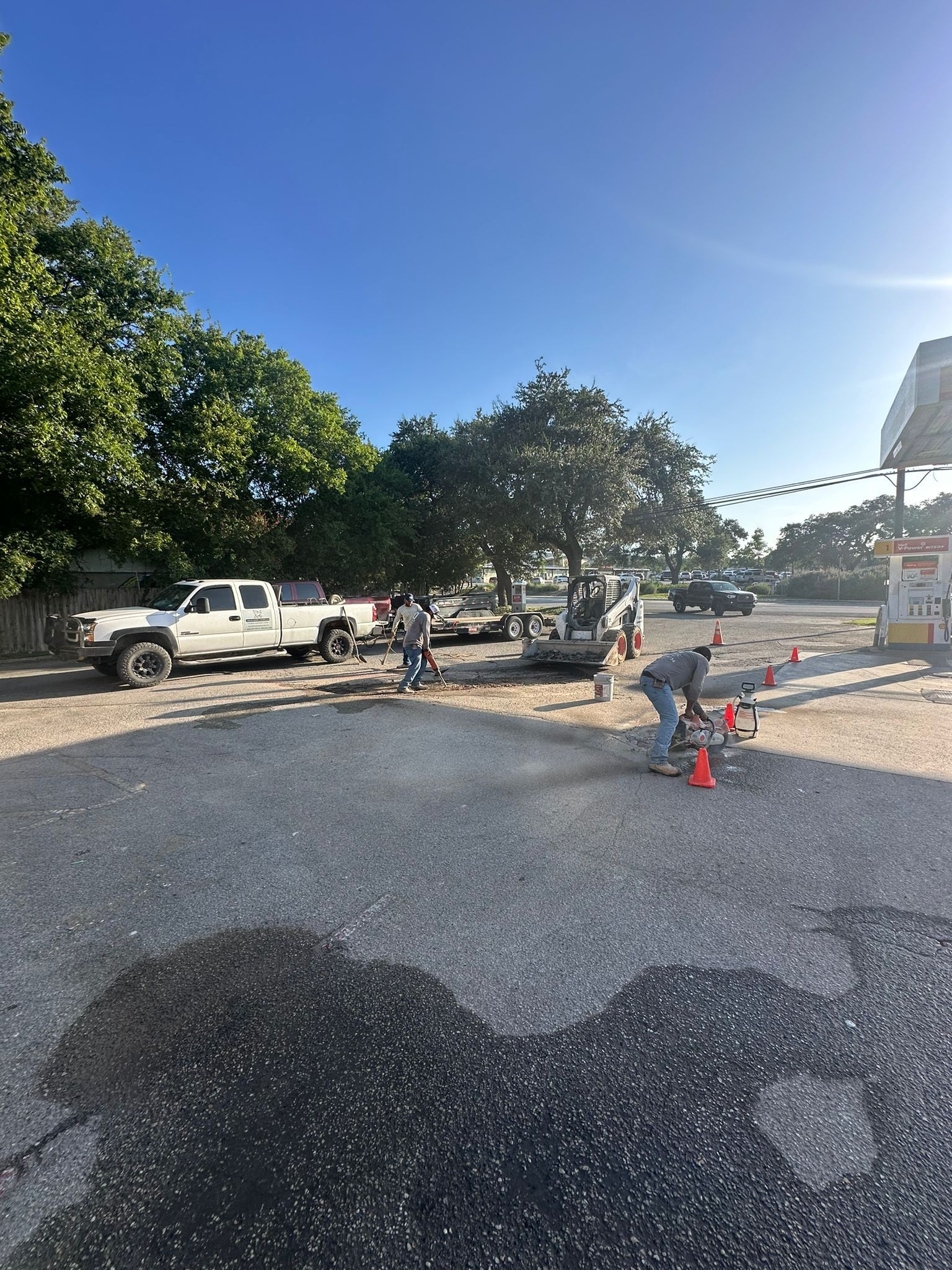
When your driveway is poured in San Marcos, the team begins by grading the site to direct water away from your garage and foundation. A compacted gravel base is added to prevent settling, and forms are set to define the edges and maintain consistent thickness. Wire mesh or rebar is placed within the forms to reinforce the concrete, which reduces the likelihood of cracks forming as the slab cures and carries vehicle weight.
After the driveway cures, you will notice a smooth, level surface with no dips or uneven sections, clean edges that separate the driveway from landscaping, and a finish that sheds water rather than pooling it. The driveway remains stable through rain and temperature changes, and it does not develop the surface wear or edge crumbling common with other paving materials.
Control joints are cut into the surface at regular intervals to allow the concrete to expand and contract without forming random cracks. The driveway is finished with a broom texture or other surface treatment that provides traction without making the surface difficult to sweep or maintain. This service includes site preparation, forming, pouring, and finishing, but it does not include removal of existing driveways or major regrading beyond what is needed for proper drainage.
What homeowners want to know before paving
Homeowners planning a new driveway often ask about thickness, drainage, curing time, and how the concrete will hold up under vehicle traffic. These questions help clarify what to expect from the pour through the first years of use.
A concrete driveway poured by Aguilar Masonry & Concrete, LLC in San Marcos gives you a smooth, durable surface that handles daily traffic and improves access to your home without requiring constant maintenance. If you are ready to replace an old driveway or add a new one, contact the team to review your site and schedule the work.