Safe, Durable Walkways for Your Property
Aguilar Masonry & Concrete, LLC builds concrete pathways and sidewalks in San Marcos that improve accessibility and provide stable surfaces for foot traffic.
Your property in San Marcos needs clear, safe routes from the street to your front door, from your driveway to your patio, and around your yard where foot traffic naturally flows. A concrete walkway eliminates the mud, uneven ground, and erosion that make these routes difficult to use, especially after rain or when carrying groceries or equipment. When a pathway is poured with proper grading and finished with a consistent surface, you get a low-maintenance route that stays level, resists weather damage, and provides safe footing year-round.
Aguilar Masonry & Concrete, LLC constructs concrete walkways designed for residential and entry areas, using methods that account for drainage, soil conditions, and daily use. Each walkway is poured to a thickness that supports foot traffic without cracking, and the surface is finished with clean lines and a texture that provides traction without being abrasive. The work includes site preparation, forming, pouring, and finishing that result in a durable surface built to withstand weather and use without ongoing maintenance.
If you need a sidewalk or pathway in San Marcos that improves access and eliminates muddy or uneven routes, get in touch to discuss your layout and site conditions.
Grading, Forming, and Surface Finishes
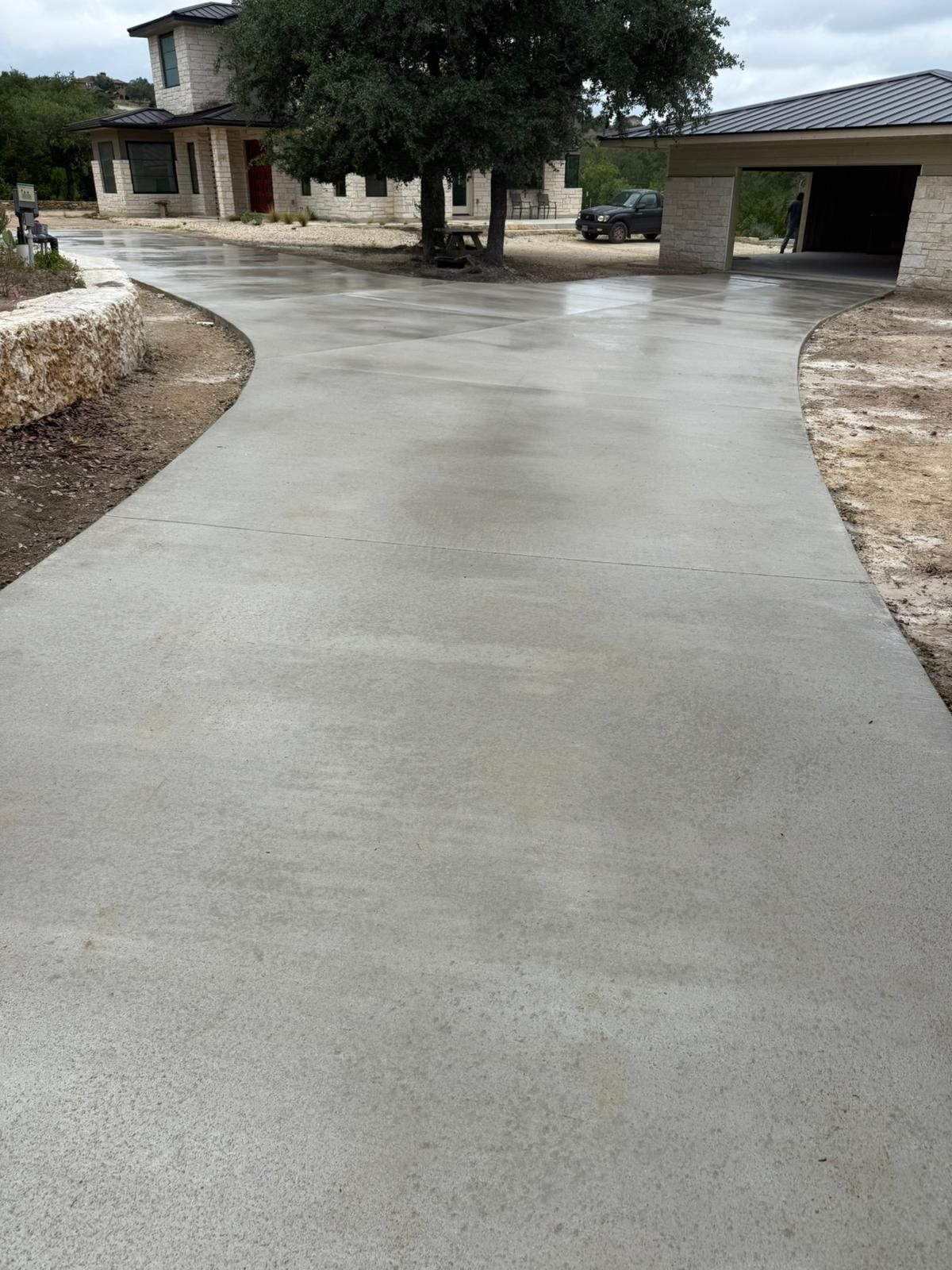
When your walkway is installed in San Marcos, the team begins by marking the route, removing sod or soil, and grading the base to direct water away from the path. A compacted gravel or sand base is added to prevent settling, and forms are set to define the edges and maintain consistent width and thickness. The concrete is poured and finished with a broom texture or smooth trowel finish depending on your preference for traction and appearance.
After the walkway cures, you will notice a level surface with no dips or high spots, clean edges that separate the walkway from landscaping, and a finish that sheds water rather than holding puddles. The walkway remains stable through rain, freezing temperatures, and daily foot traffic, and it does not develop the cracks or edge crumbling that occur with poorly prepared or thin slabs.
Control joints are cut into the concrete at regular intervals to manage expansion and contraction, which prevents random cracking and keeps the walkway looking clean over time. The walkway is built to the width and thickness appropriate for your property, typically four inches thick for residential use. This service includes site preparation, forming, pouring, and finishing, but it does not include removal of large trees, roots, or major regrading beyond what is needed for proper drainage.
Common concerns before pouring a walkway
Homeowners planning a concrete walkway often ask about width, thickness, drainage, and how the surface will perform in different weather conditions. These questions help clarify what to expect from the installation through years of daily use.
A concrete walkway built by Aguilar Masonry & Concrete, LLC in San Marcos gives you a durable, low-maintenance surface that improves accessibility and eliminates the mud and erosion that make foot traffic difficult around your property. If you are ready to add a sidewalk or pathway, contact the team to discuss your layout and schedule the installation.